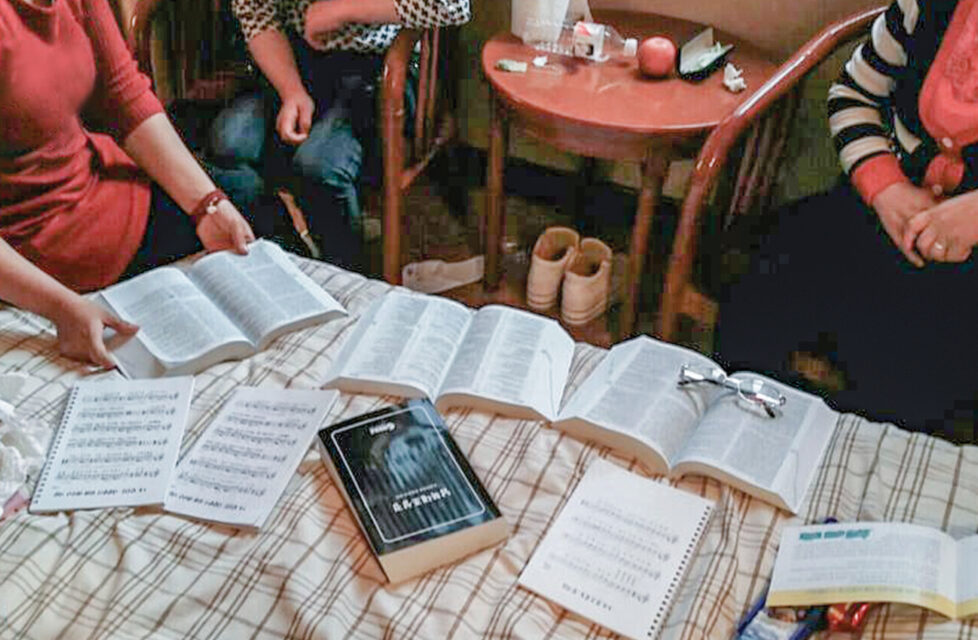
For 20 years, Sung-mi lived in China, where she had been trafficked and sold to a Chinese man to be his wife. But during that time, she found true freedom and a purpose. When a North Korean friend there shared the gospel with her in 2015, Sung-mi decided to visit her church and learn more about Jesus. But after attending a few services, she found it difficult to connect with church members and stopped attending. North Koreans often feel isolated in China. They avoid contact with Chinese people because they are there illegally. Then, one day she happened to meet a VOM worker. “I was invited to his church,” Sung-mi recalled. “Over time, as I saw his honesty and service to other North Korean ladies, I started understanding what it means to live as a Christian.” The VOM worker visited Sung-mi regularly and helped her with Bible study, eventually leading her to faith in Christ. “Christ came to my heart through the life of the VOM worker,” she said. “My heart filled up with joy as I came to know the Lord after 20 years of my life in China all by myself. Now, God and his people are with
Read More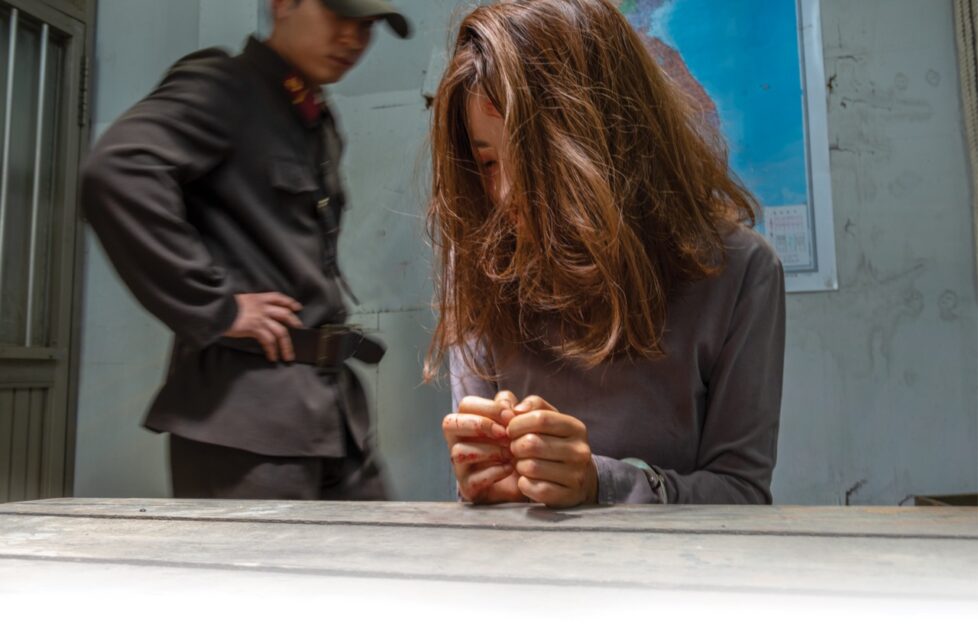
When North Korean authorities caught Min-ji selling South Korean DVDs to earn extra money in 2008, her husband, Kun-woo, feared for his life. As a high-ranking member of North Korea’s State Security Department (SSP), he knew his wife’s crime, which was punishable by death, could implicate him, too. In fact, their entire family could be executed because she was selling “propaganda” from the south on the black market. To delay his capture and potentially save his teenage children, Kun-woo fled to Yanji, China. Meanwhile, Min-ji’s relatives, also SSP officials, took in the children and bribed those who oversaw her case to reduce her sentence. So instead of death, she received a prison sentence. Kun-woo returned to North Korea following Min-ji’s release from prison, but he was not the same man Min-ji remembered. He could not stop talking about a book called the Bible and a being named God who hears our prayers. A family he met in China had told him about the Good News of Jesus Christ, and now every time Kun-woo ate a meal with his family, he gave thanks to the Lord. “I thought he was crazy,” Min-ji told a VOM worker. Problematic Prayers In the four
Read More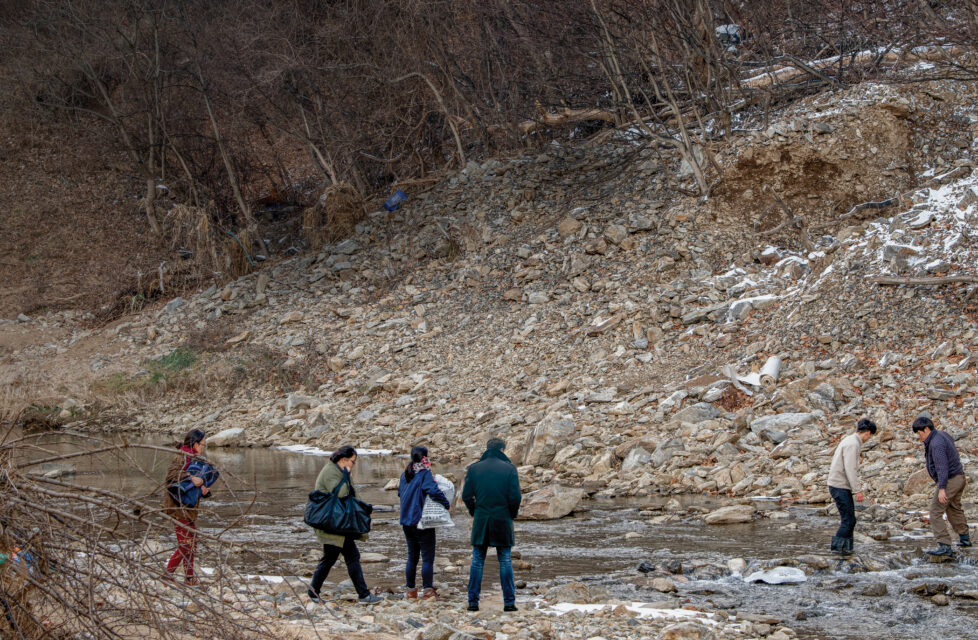
Lee Chul-ho encountered Jesus Christ in 1998 after defecting from North Korea. Desperate to escape the famine that had ravaged his country for four years, he crossed the Tumen River into China, where he met a South Korean missionary who helped him and shared the gospel with him. Upon hearing the Good News, Chul-ho placed his faith in Christ. While recovering from malnutrition, Chul-ho consumed God’s Word, reading the Bible several times the first year. For the next three years, he taught other North Korean defectors about Christ and gradually broadened his ministry to include helping North Koreans at the border as they crossed into China. He also got married during that time. Then, one summer day in 2001, Chinese police arrested Chul-ho and his wife, who was seven months pregnant, as they waited for a group of North Koreans to cross into China’s autonomous Inner Mongolia region. “For the sake of my wife’s survival, I had to tell [the police] that she was not my wife,” Chul-ho said. “I told them that I did not know her.” Despite his attempt to protect his wife, both were detained for several days before being transported to Sinuiju, North Korea. When Chul-ho
Read More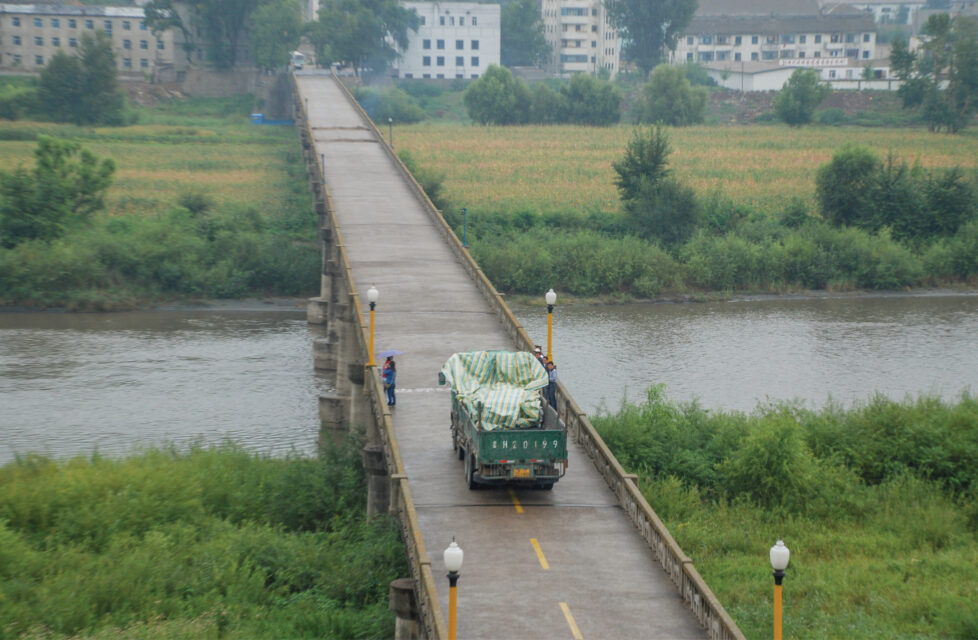
When a North Korean man’s relatives invited him to read the Bible, everything changed. Years ago, Byung-woo traveled from his home in North Korea to visit relatives in China. His relatives, who were part of China’s vast underground church movement, invited him to read the Bible while he was there. When he declined, they fasted and prayed for a couple of days, hoping he would change his mind. That puzzled Byung-woo even more than the original invitation. Finally, out of curiosity and a desire to appease his family, he agreed to give the book a cursory read. But the more he read, the more questions he had for his relatives. The Bible translation used the South Korean dialect rather than the North Korean dialect. The two dialects differ roughly 40 percent of the time. Still, the parts he understood fascinated him. Seeing Byung-woo’s interest, his relatives took him to their house church, where church members explained the need for the gospel in North Korea and implored him to start an underground church there. They were prepared to provide him with food and money to sustain him, Bibles to distribute and a bicycle to help him reach more people. Byung-woo grew
Read More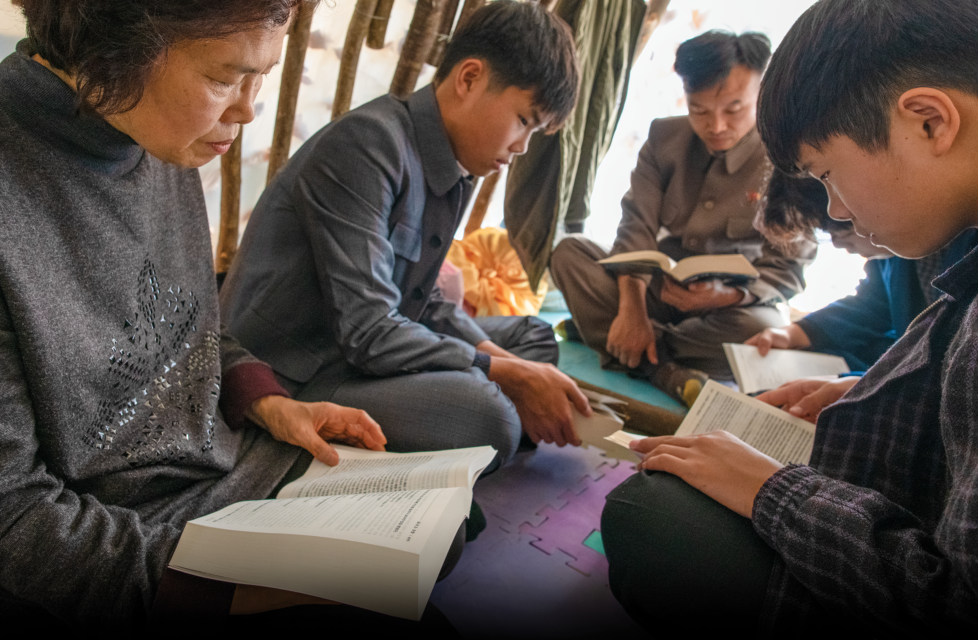
Each time a new customer walked through the door of the small coffee shop in South Korea where Min-jae shared his story with VOM workers, he hesitated or stopped talking completely. The middle-aged North Korean studied each person’s face anxiously, searching for clues to his or her intent. Min-jae knew from experience that he could never be too careful, even outside North Korea. Spies often cross the border into South Korea to find defectors and report their names to the North Korean government, which then punishes their relatives still living in the country. “In North Korea, no one trusts each other,” said Min-jae, who even suspected his wife of being a spy. “We have to be very cautious about how we think and always careful with our words. I still have that kind of tendency. I get a little nervous, looking back and forth.” With the coffee grinder providing background noise, Min-jae gradually grew more comfortable sharing the story of how he became a Bible smuggler in the most restricted nation on earth. The Bible: Dangerous Cargo in North Korea Min-jae became a believer during a lengthy business trip to China in 2004. While there, he had visited a friend’s
Read More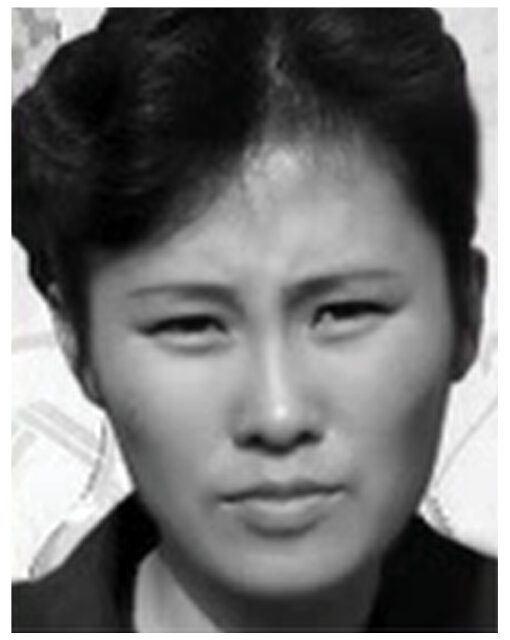
If not for a North Korean government training video, the testimony of Cha Deoksun’s life would never have been known. Produced to train state security agents how to identify and silence those who promote religion inside North Korea, the film denigrates anyone who practices religion. According to the film, Deoksun received Christ in China and then returned to North Korea to share her faith. Incredibly, the propaganda film gives many details about the life of this courageous Christian. It states that during North Korea’s “Great Famine” in the mid-1990s, when an estimated 2.5 million people died, Deoksun was a strong revolutionary whose faith in the government had wavered. After visiting a woman in the northwest to ask for help, she illegally crossed the border into China in search of her uncle. But instead of finding her uncle, who had died, Deoksun found the Seotap Church, where she heard the gospel for the first time. The video says she became a “fanatical believer” who was inspired to return to North Korea and form an underground network of Christians inside the country. When she returned to North Korea, Deoksun apparently turned herself in to authorities for crossing the border illegally. The video
Read More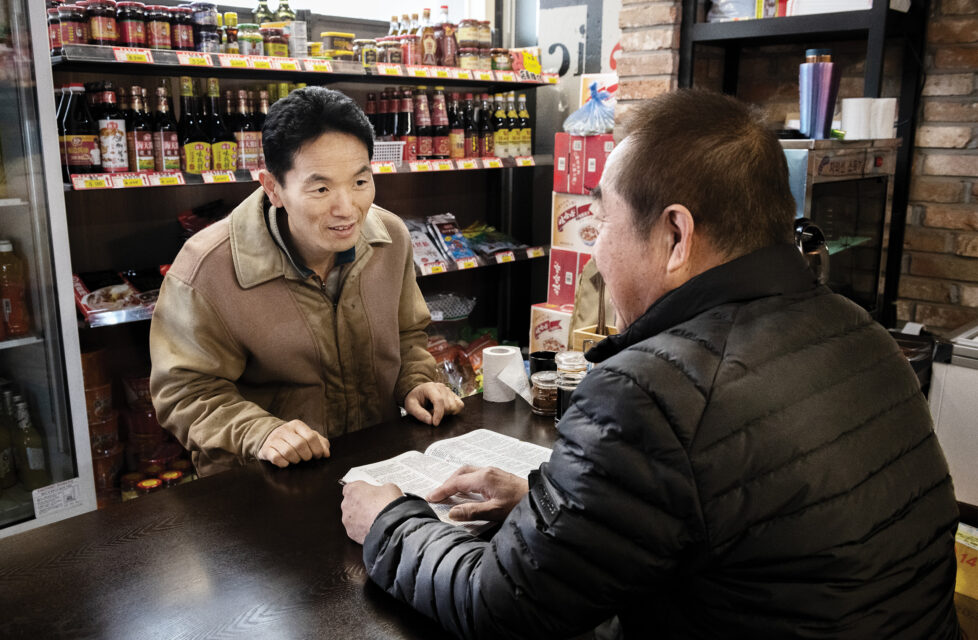
After spending five years building relationships with 40 North Koreans in China, a faithful Chinese Christian eventually led one man — a North Korean government official — to Jesus. Lee Joon-ki scanned the Chinese coffee shop carefully for the right place to sit. The shop’s owner, a fellow Christian, had told him about a middle-aged laborer from North Korea who was in the shop, and Joon-ki wanted to sit in just the right spot to start a conversation with him. After sitting down at a table near the man, Joon-ki began a casual conversation with him, even managing to draw the coffee-shop owner into the discussion. These conversations, which can quickly turn dangerous for everyone involved, are what he lives for; Joon-ki is a front-line worker who shares the gospel with North Koreans inside China, near the border with North Korea. “Encountering these North Korean people, building relationships and leading them to Christ, is God’s work; it’s full of God’s grace,” he said. “Just meeting with him for an hour is so precious. It is not something we can do normally. Each time could be last time.” Joon-ki, an ordained pastor, has served as a front-line worker for over six
Read More
watching the church go underground After turning away from Christ in the early days of Kim Il Sung’s Communist regime, a North Korean woman was led back to faith by a single Bible verse. Rhee Soon-ja has vivid memories of her father reading the Bible to her and her six siblings when they were children. She remembers that the verses were printed vertically, rather than horizontally. And although now 82 years old, she can still picture the phrase “Christ Is Lord of This House” hanging from a wall in their home. “My parents prayed that God would use me as His servant,” she said, recalling another childhood memory. “I grew up dreaming of becoming an evangelist.” Those were the days before Korea split into North and South, communist and free. Those were the days when the Christian faith flourished in northern Korea. “There were many Christians,” Soon-ja shared from her living room in South Korea. “I attended the Methodist Church. All the congregations gathered every Sunday.” When Soon-ja was a young girl, her family was among the first to experience persecution under the rule of Kim Il Sung, North Korea’s first leader. Today Christianity is illegal there, and those who
Read More
a dangerous secret Once fearful of even seeing a Bible, a former North Korean border guard now embraces it. Nearly every day for 11 years, Park Chin-Mae dutifully monitored North Korea’s border with China. From 8 a.m. to 10 p.m., he watched for North Koreans attempting to defect or smuggle contraband into the country. Chin-Mae took pride in his work as a border guard, even though he was guilty of the same illegal activities for which he arrested others. Like many North Koreans, he relied on illegal smuggling simply to survive. becoming the enemy When another guard reported Chin-Mae’s smuggling ring, he spent 60 torturous days in prison. And he hadn’t even smuggled the most dangerous item into the country — a Bible. “Those who let Bibles into North Korea had a more severe punishment than someone who kills people,” Chin-Mae said. For Chin-Mae, getting caught smuggling meant being reduced from a respected soldier to a worthless prisoner. For the first 10 days, he was forced to stand in a bowing position and was allowed to move only to use the restroom. If he moved, even during the night, he was beaten mercilessly with a wooden baton. For the next
Read More
Choon-yei was born into a comfortable and secure family, by North Korean standards. Her father was a military officer, and her mother was a housewife. Since family background largely determines the future for North Korean citizens, her family could expect a good life. In 1995, however, just a few years after Choon-yei’s birth, North Korea experienced the worst famine in its history. Millions died of starvation. And even though her father was a military officer, Choon-yei’s family received only two fistfuls of corn flour each day — not nearly enough to feed a family of four. In desperation, they gave up on the government’s ability to provide for them and began dealing on the black market. But the extra corn flour that her mother had obtained from a relative and sold illegally still barely provided for their family. “Any North Korean who survived that time period is a living miracle,” Choon-yei said. “North Koreans had to break the law just to eat a meal. State security agents would confiscate anything they uncovered on the black market and eat it themselves.” The famine was just the beginning of Choon-yei’s suffering. Her parents died when she was in her early teens, and
Read More