North Korean Defector Imprisoned in China, but is “Free In Christ”
North Korea
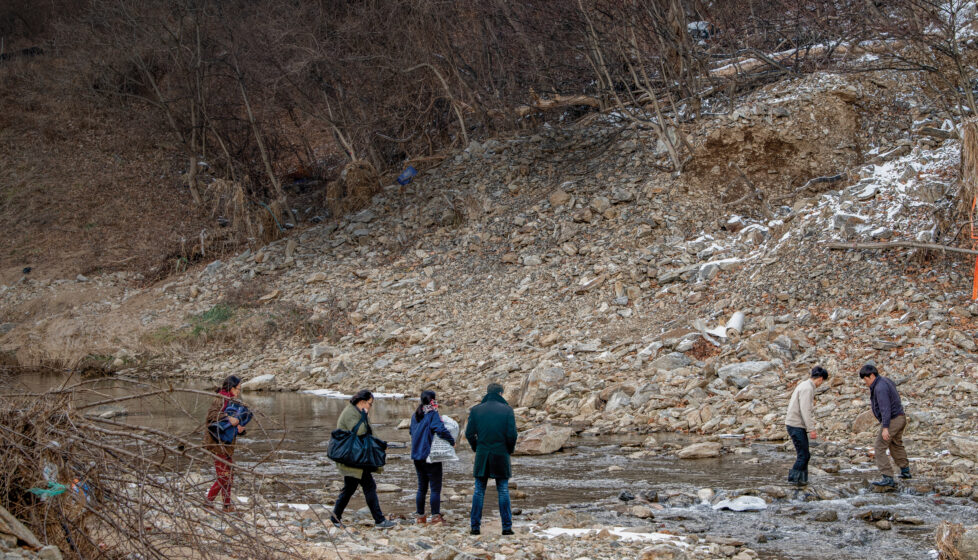
Lee Chul-ho encountered Jesus Christ in 1998 after defecting from North Korea. Desperate to escape the famine that had ravaged his country for four years, he crossed the Tumen River into China, where he met a South Korean missionary who helped him and shared the gospel with him. Upon hearing the Good News, Chul-ho placed his faith in Christ.
While recovering from malnutrition, Chul-ho consumed God’s Word, reading the Bible several times the first year. For the next three years, he taught other North Korean defectors about Christ and gradually broadened his ministry to include helping North Koreans at the border as they crossed into China. He also got married during that time.
Then, one summer day in 2001, Chinese police arrested Chul-ho and his wife, who was seven months pregnant, as they waited for a group of North Koreans to cross into China’s autonomous Inner Mongolia region. “For the sake of my wife’s survival, I had to tell [the police] that she was not my wife,” Chul-ho said. “I told them that I did not know her.”
Despite his attempt to protect his wife, both were detained for several days before being transported to Sinuiju, North Korea. When Chul-ho entered the North Korean prison, he lost everything. “In Sinuiju, my wife was forced to have an abortion,” he said.
He never saw his wife again.
Prison Ministry
Chul-ho was released from the North Korean prison in the fall of that same year. And three months later, he crossed the Tumen River for a second time to resume his ministry work among North Korean defectors in China. Even though the work had already cost him his wife, he recognized that the need was too great to stop.
In the spring of 2002, Chul-ho was again detained by Chinese border police while ministering to defectors along the border. This time he was charged with “systematically organizing a group and illegally helping them cross the river.” Chinese authorities quickly convicted Chul-ho and sentenced him to 10 years in prison.
His life behind bars was intolerable. The three-story prison held 2,000 inmates, packing 40 prisoners into each small cell. It was too hot to sleep during the summer and nearly too cold to breathe in the winter. Guards monitored Chul-ho 24 hours a day.
“I was classified as a dangerous prisoner because I was a Christian who would be sent back to North Korea after there,” he said. “Basically, they saw me as a person without any hope of living. They thought that I was going to commit suicide.”
Early in his imprisonment, Chul-ho began receiving letters every two months from Christians in the United States and other countries. The letters, sent by readers of The Voice of the Martyrs’ monthly magazine, provided essential encouragement and a sense of fellowship with the global church throughout his 10-year sentence.
The encouragement he received from caring Christians helped sustain him as he endured repeated interrogations and beatings. On one occasion, guards forced him to stand against a wall from 3 a.m. to 9 a.m., and if he moved, they kicked him or slammed his head against the wall. Through it all, Chul-ho clung to Christ.
“After investigating me in this way, one police officer told me that I had not sinned,” he said. “This officer came to realize that I did a righteous thing and should be recorded in history because I suffered for my people.”
The officer promised that if he was ever promoted, he would save Chul-ho.
As the months and years passed, Chul-ho said he entered a deep depression and had no idea how he could continue living behind bars. Soon, however, God pulled him out of the darkness and gave him a new purpose.
“I believed that it was God who started this work and that He would take me somewhere,” he said. “If I ever made it out of there, I hoped that the 10 years of imprisonment would not have been in vain.”
That’s when Chul-ho decided to make the most of his time in prison. After doing manual labor from 6:30 a.m. to 9 p.m. every day, he spent a few hours each night reading the Bible and studying Chinese.
As he continued his studies, he also built relationships with other prisoners and soon became known as the “North Korean pastor.” And gradually, other North Korean defectors who had become Christians approached him secretly. “They showed me their cross necklaces,” he said.
Although the believers weren’t allowed to hold formal worship services in prison, Chul-ho often read from the Bible and other Christian books he had at the time of his arrest. “I preached, taught and evangelized people in the prison,” he said. “I was even distributing Bibles and Christian books to those who showed interest in the faith.”
Hope in the Darkness
Of the prison’s 2,000 inmates, Chul-ho said 200 were from North Korea. And like him, most had defected to China simply to survive the famine.
One young North Korean with whom Chul-ho shared the gospel made a heartbreaking confession: He had sold his own mother to human traffickers in China in order to help the rest of his family. Still grieving over his unthinkable deed, the man turned to Jesus. Chul-ho said he is one of many North Koreans who came to know Christ in the Chinese prison.
“One could assume that all the North Korean prisoners I met in prison were all sent to North Korea,” he added. “They may have died there, but I am sure that some of them went on to be North Korean underground Christians.”
On a Sunday afternoon in 2011, one day before he was to be released from prison, authorities took Chul-ho to another building for interrogation. They then gave him new clothes, put him in a car and drove him to a city on the North Korean border. “They had brought me there to send me back to North Korea,” Chul-ho explained.
On that day, however, North Korea’s border office was closed because the government had just announced the death of its leader, Kim Jong Il. An officer then took Chul-ho to China’s foreign affairs department of Chinese Public Security, where the chief of staff happened to be the officer who several years earlier had told Chul-ho that he would save him if ever promoted.
“He really did save me,” Chul-ho said. “I stayed there for three months. After the first intense interrogation, I was treated nicely. They began treating me in a good way. The officer kept his word.”
In early 2012, Chul-ho was released as a “person of unknown nationality.” Since he had other relatives in South Korea, he was able to obtain a passport from the South Korean embassy and was then flown to Incheon, South Korea.
Aboard the plane, Chul-ho looked out the window and watched China’s Yanji airport disappear into the distance. “I felt like God was saying to me, ‘I am doing my work,’” he said. Though hopeful about his future, Chul-ho said the flight to South Korea was both joyous and unsettling.
“I was quite [emotionally] unstable when I was released,” he said. “But walking on the ground outside of the prison with my own two feet gave me such an ecstatic feeling. There is no human word that can describe that feeling. Until the moment I landed at the Incheon airport, I felt like someone was chasing after me.”
Looking back on his time in prison, Chul-ho can see how God was working through him. “In the beginning, I was not able to understand why God had put me there, because doing Christian work to save my people was not my own will but God who gave me the heart for it,” he said. “So in the beginning I had hatred against, and lots of struggles with, God. One day in the prison, I was even considering committing suicide. But now I can say that it was God who held my hands.”
A New Mission Field
After arriving in South Korea, Chul-ho met VOM workers who helped him adjust to life there.
North Korean defectors often struggle with the freedom they experience in South Korea. After years of hoarding what little they have, they find themselves squandering everything they’re given or are able to earn. And in place of the steady stream of government propaganda, they are inundated with pop culture and its supporting media, such as TV, radio, magazines and websites. They also have to learn to trust people after living in an environment of suspicion and the fear of being spied on by neighbors and family members.
Another common issue is the need to correct bad behavioral habits. Chul-ho said many in North Korea are forced to engage in unethical activities just to survive, and some continue those lifestyles after defecting to South Korea and China. They will often do anything to earn money and survive in their new environment.
After receiving help from VOM, Chul- ho decided to shift his ministry focus to North Koreans who initially defect to Laos, a common path for many hoping to eventually reach South Korea. His goal is to introduce them to Christ before they settle in South Korea.
For years, Chul-ho has shown North Koreans in Laos the love of Christ by providing care packages and discipling many of them in the faith. Nearly every month, he travels to Laos to meet small groups of defectors, typically five to seven people at a time.
“Discipling them in Laos is the last place for them to encounter God’s Word, which pierces their twisted conscience, before coming to South Korea,” he said. “I am trying to share the gospel with them in this specific way, where they can deeply think about the gospel for the first time in their life.”
He said the care packages, which include personal care items, medicine, clothes and an audio Bible, are a crucial part of his front-line ministry. “For North Koreans, the gospel is shared and manifested through people’s acts of service,” he said. “When I defected to China a long time ago, I saw a church. The church always had its light on, but I did not even think about going inside. However, there was one missionary who gave me many clothes. Even though the clothes were used clothes, through his love, which manifested God’s love, I was drawn to the Lord. For North Koreans, the gospel must come along with meeting their material needs.”
Chul-ho said those who hear the gospel and receive discipleship in Laos are more likely to attend church and live a godly life in the large, bustling cities of South Korea. And those who aren’t reached in Laos, he said, continue worshiping idols, trading Kim Jong Un for the idol of money.
“Both groups need a moment in their life to deeply consider faith before coming to South Korea,” he said. “Once they come to South Korea, the social structures and the worldly atmosphere drive and demand them to depart from God.”
Despite the trauma Chul-ho has experienced and the pain he re-lives when he hears of other North Koreans who have suffered for their faith, he said he’s learning to let God carry him in his work.
“In my dreams, I sometimes see myself in prison or [see] the faces of those who were martyred,” he said. “But I began to realize that the trauma also has the power to boost this ministry so that I can be thankful for this work. I am no longer imprisoned, but free. Even though the ministry is painful and demanding, I have full confidence in the Lord, who does this work. If I have learned one thing from my imprisonment, I learned that it is not my will but God’s will which will be done.”
Chul-ho said he hopes Christians around the world will continue to pray for North Korea and support other front-line workers who minister to those who have fled the oppressive regime.
“On the news, people speak all kinds of political talk about North Korea,” he said. “But I believe that raising up a North Korean and helping that person become a disciple of Jesus is the only alternative for North Korea.”

 Guide
Guide