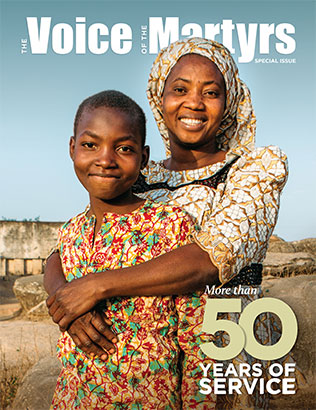
Nigerian Widow and Children Seek Refuge After Village Attacked
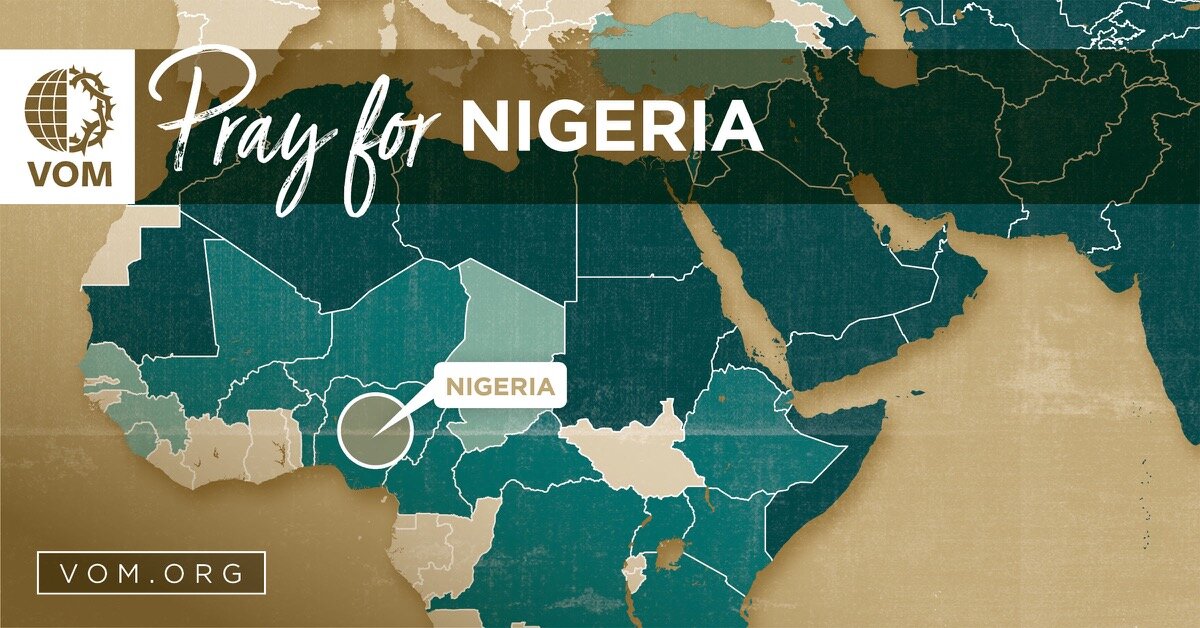
Nigeria
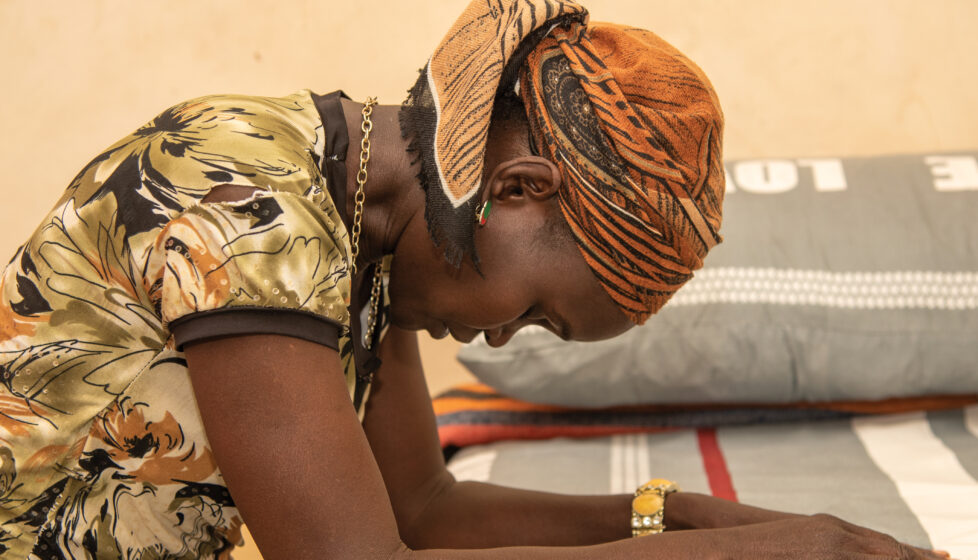
She never expected to suffer persecution, but when Naomi’s town was overrun by Islamic terrorists, she was ready. Her church and the Bible had taught her well: “Persecution is God’s Word being fulfilled.”
Naomi had already experienced suffering. When her husband died in 2009, her in-laws, who in Nigerian culture would be expected to help her and her five children, rejected her. With no other options, Naomi moved in with her parents in the town of Gwoza, in Nigeria’s northeastern Borno state. Hoping to rebuild her life, she set about the work of providing for her family and educating her children, the youngest of whom was only 1 year old when his father died.
Not long after their move to Gwoza, a violent Islamist organization began gaining power in the area, advancing its goal of “purifying” northern Nigeria for the sake of Islam.
The Attack
Boko Haram, whose name means “Western education is forbidden” in the Hausa dialect, began waging an insurgency across northern Nigeria, targeting military installations, police stations, government buildings, churches and civilians, primarily in Borno state.
By 2014, conflicts between Boko Haram and Nigerian security forces had become common as the insurgents fought for control of Borno state’s capital, Maiduguri. Frustrated at its failure to gain control in Maiduguri, Boko Haram turned its attention to the majority Christian community of Gwoza and its 300,000 residents. While previous offensives in the area had been announced by letters warning civilians to clear out, the Gwoza attack came unannounced. “This time they came without warning,” Naomi said.
The day of the invasion, Naomi was working on her plot of farmland outside the city when she heard distant gunfire. “The Muslims who were at the farm with us told us to be careful while going home,” she recalled, “because they knew what was happening.”
Naomi’s first concern was for her children at home. But as she rushed down the road toward town, she and several other women were caught by Boko Haram fighters. “They asked us to show them the houses of Christians, and they challenged us to renounce our faith,” Naomi said. “They threatened to kill us if we did not.”

After Naomi pleaded with the militants to let her go, telling them she was a widow with children, the group’s leader took pity on the women and released them.
“All I could think about was my kids,” Naomi said. “My mother said I should be careful, but I told her I did not care if I got shot. I started running.” She ran past the horrific scene of headless corpses as she searched for her children. And after she gathered her family, they ran into the forested Mandara Mountains, where they would remain for the next two years.
Hiding in the Mountains
After reaching the mountains, they found others from Gwoza who had fled the attack. The children slept in caves with their parents guarding the entrance, while some people slept in the grass. But the danger below was never far from their minds. “Day and night, there were bullets everywhere like water,” Naomi said.
For the first few days, the refugees ate whatever edible leaves they could find. Then, after deciding the attack must be over, they carefully returned to their homes. Within hours, however, the sound of gunfire returned. “We thought the terrorists would not come back again,” Naomi said. “We did not know they had gone to their Muslim friends in our community and had started living with them in their houses.”
Naomi and the others kept hoping they’d be able to return to their homes, but Boko Haram never left. Naomi felt desperate and alone. “I had only God,” she said, “and I talked to Him. He gave me the strength I needed.”
Naomi, her children and several thousand others lived on the mountain for two years before fleeing to Cameroon. “The morning we left for Cameroon, Boko Haram followed us,” Naomi said. “They were shooting and detonating bombs.”
Sojourners Return
Naomi and her children stayed in a Cameroonian refugee camp for two months. But conditions in the camp were very difficult, and more than 300 refugees had died by the time Naomi and her children returned to Nigeria, guided along the way by ethnic Fulani herdsmen.
When Naomi and her children arrived in Jos, a city in central Nigeria that had not yet been affected by Boko Haram, they stayed at a camp for internally displaced people until being told they had to leave. “I did not know where to go,” Naomi said, “so I cried to God.”

Some months later, front-line workers became aware of their situation and provided assistance. They helped the children get started in a good school and eventually helped the family move into their own house. Today, Naomi’s older children have graduated from high school and continued on to vocational schools. Her youngest child, a teenager named Samson, was a toddler when his father died.
Life as a single parent has not been easy for Naomi, but as she looks back she realizes that she was never alone. “Since the passing of my husband, God has kept me,” she said. “I have always had faith in God. The attack only made me stronger in my faith.”
She draws inspiration from her namesake biblical heroine, the mother- in-law of Ruth, who also was a widow and sojourner in a foreign land. “My name is Naomi, and I want to be like the Naomi in the Bible,” she said. “Pray for me, that with the help of God I will not fail.”
 Guide
Guide