Central AsiaLaws Criminalize Teaching Children About Christ
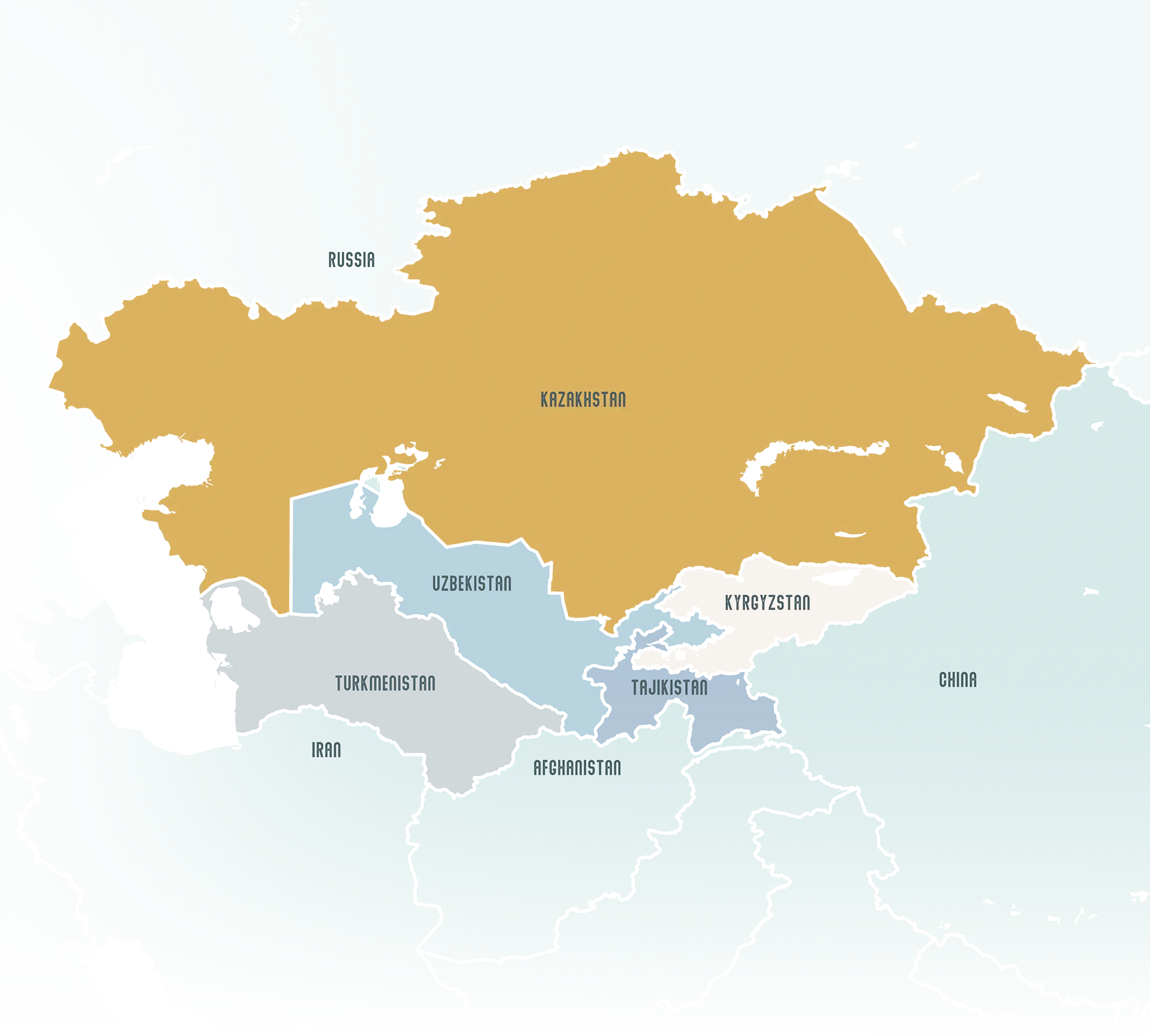
- Uzbekistan Population: 37 million, 2% Christian
- Kazakhstan Population: 20.7 million, 15% Christian
- Tajikistan Population: 10.7 million, ˂1% Christian
- Turkmenistan Population: 7.5 million, 4% Christian
- Kyrgyzstan Population: 7.2 million, 4% Christian
Towering mountain ranges such as the Pamir, Hindu Kush and Tian Shan declare God’s glory across Central Asia. But today, governments throughout the region use restrictive religion laws in an attempt to prevent pastors, teachers and even Christian parents from teaching children about Christ.
Pastor Parviz knew the risk he was taking as he packed the Christian children’s books into his suitcase and prepared to return home to Tajikistan. But as a pastor and a parent, he also knew that no investment or sacrifice was too great in order to provide discipleship materials for the children in his small fellowship.
The laws of Tajikistan and other nations in the region restrict and even forbid teaching religious beliefs and practices to children. If the Christian children’s books buried in Parviz’s suitcase were discovered, he could be fined, arrested or even imprisoned. Still, he believed the risk was well worth the gain of discipling children in the Lord.
As he crossed the Tajik border, Parviz was stopped and searched, which led to the discovery and confiscation of the Christian children’s books. He received a significant fine and may face additional punishment.
Governments across Central Asia actively oppose the advance of the gospel. Top-right inset: In Tajikistan, government restrictions prevent children from joining their parents in church. Left inset: Christians in Central Asia remain committed to discipling children in God’s Word despite government restrictions against it.
Five Central Asian nations — Kazakhstan, Kyrgyzstan, Tajikistan, Turkmenistan and Uzbekistan — restrict what people can teach children. Front-line workers report that two of those nations, Kazakhstan and Kyrgyzstan, don’t prohibit instruction that occurs inside officially recognized church facilities but do monitor the churches’ activities. Tajikistan and Turkmenistan have strict laws forbidding the teaching of religion to anyone under 18 unless the teacher is a government-sanctioned and licensed official.
Uzbekistan, a country which had until recently seen some restrictions loosened on Christian worship and practice, passed a new law on Feb. 21, 2025. Parents who teach or allow their children to receive any illegal (non-government approved) religious education before the age of 18 can be fined more than a month’s wages and sent to jail for 15 days. Front-line workers said the Uzbek government also requires that every book in the country be reviewed and stamped to indicate government approval. “If people are caught with books without the approval code,” a front-line worker said, “it can be a problem for them.” The secret police can harshly punish anyone they consider to be an offender.
Creative Teaching Solutions
A front-line worker in Tajikistan said Christians there have to find ways around the law in order to disciple their children in the Christian faith. Because of the lack of Christian-education materials for children, they must try to access materials digitally. And since print copies can be a liability, they often teach the lessons and show illustrations only on computer screens.
When parents are in church services, their children must be somewhere else. “This restriction is a hard one, especially on parents,” said a Tajik pastor named Olim. “Their kids cannot go to church on Sundays, but they are taught Islam on the streets. It's really hard to go against the flow without a church family supporting and encouraging children.”
One Tajik pastor recently reported that he and another church leader were interrogated by secret police after a girl from their house church shared the gospel with her classmates. Other Tajik church leaders have been monitored, arrested and fined. VOM has helped meet their needs, and a front-line worker has asked for continued prayer for them. “The leaders were stressed during the process,” he said, “and they need encouragement.”
Laws governing religion in Tajikistan and some other Central Asian countries weren’t always so restrictive. When the region was under Soviet control, all Islamic and Christian practices were strictly regulated, but the collapse of the Soviet Union in 1991 brought a new time of openness.
“We started meeting with children ... from all the neighborhood,” Pastor Olim said. “For many days, we needed two rooms because we were up to 60 [children]!” Even Muslim parents didn’t mind that their children attended the Christian meetings. “If you are helping my child, I don’t really care what it is,” they told Pastor Olim.
But now that kind of open work is impossible. “Now it is illegal,” Olim said, referring to a law similar to the one that was recently passed in Uzbekistan. “Now we cannot preach in schools or orphanages or public places.”
Left: Nearly all Tajiks are Sunni Muslims, and Christian converts often experience harsh treatment from their families and the government. Right: While Christian parents in Uzbekistan are still unsure how strictly the new anti-religious teaching law will be enforced, they worry it will be more difficult for them to disciple their children.
To work around the problem, he said, church groups sometimes construct or rent buildings near the facilities they are using as a church. That way, children can be taught at the same time the parents are meeting to worship. Christian summer camps are also illegal, so some churches host sports or art camps with the goal of discipling young people as they learn other skills.
At a recent camp in Uzbekistan that usually had an attendance of about 60% Christian children and 40% non-Christian, some non-Christian parents complained to the government. Officials investigated the camp, but the young attendees were so positive about their experience that authorities chose not to prosecute the director. They did, however, fire the director from her government teaching job for leading the camp.
Targeted but Not Stopped
Central Asian governments claim that their restrictive religion laws are intended to defend against radical influences, such as Islamic extremism, especially since Taliban forces control nearby Afghanistan. In Uzbekistan and Kyrgyzstan, young men are not allowed to grow beards (which can indicate involvement in radical Islamic groups), and religious headscarves that almost completely cover women’s faces are also forbidden.
Despite the claims of the governments, Christians, who are already a persecuted minority in the region, believe they too are targeted by the religion laws. Official Bible training schools are not allowed, so Christian leaders must either travel outside the region for their education or attend a covert training school. In addition, courts and judges in the region often treat minority Christians unfairly, issuing harsher fines and punishments, especially on those who have converted from Islam.
When parents are in church services, their children must be somewhere else.
Since the anti-religious teaching law in Uzbekistan is relatively new, Christians are not sure how strictly it will be enforced and how it will affect Christian families. But Christian parents in Uzbekistan worry that the law will make it more difficult for them to disciple their children.
As Christians in Central Asia persevere in faith amid these government restrictions, The Voice of the Martyrs is committed to helping them get the Christian educational materials they need to raise their children as followers of Christ. VOM helps supply and deliver Bibles and other Christian literature throughout Central Asia, while standing with Christians like Parviz by paying legal fees and offering prayer and encouragement when they are persecuted for their faithfulness.
Government restrictions may occasionally slow the efforts of pastors and Christian parents to teach children about the love of Christ, but they cannot stop the gospel’s advance across Central Asia.